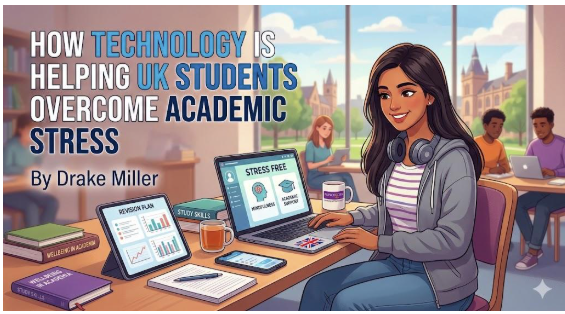
By Drake Miller
The academic landscape in the United Kingdom has reached a boiling point. From the rigorous demands of A-Levels and Scottish Highers to the high-stakes environment of Russell Group universities, students are facing unprecedented pressure. According to 2025/26 Student Mental Health Research, over 55% of UK students have experienced mental health difficulties, with academic pressure and financial stress cited as the primary drivers.
However, a digital revolution is taking place within the UK education sector. While technology is often criticized for being a distraction, it is increasingly becoming the primary tool for managing mental health and heavy revision workloads. For students seeking to balance their personal lives with demanding curricula, technology isn’t just a luxury—it’s a lifeline.
In this article, we explore how modern digital tools and specialized dissertation writing services are helping UK students navigate academic stress and achieve a healthier work-life balance.
1. The Rise of EdTech in Personal Productivity
The “always-on” culture of modern education can make students feel like they are constantly falling behind. Technology addresses this by providing sophisticated organization tools that go far beyond a paper planner.
- Intelligent Scheduling: Apps like Notion and Trello allow students to break down massive dissertations or year-long modules into manageable tasks.
- The Pomodoro Technique: Tools like Forest or Opal (which now offers 50% student discounts in the UK) allow students to gamify their focus, ensuring study time is high-quality and “guilt-free” downtime is earned.
2. On-Demand Academic Support: Bridging the Knowledge Gap
One of the greatest sources of stress for Sixth Form and University students is hitting a “brick wall”—a concept or assignment they simply don’t understand. In the past, a student might have to wait days for a tutor’s office hours.
Today, online academic assistance platforms have filled this gap. Whether it’s clarifying a complex engineering formula or finding inspiration through curated history dissertation topics Myassignmenthelp.com provides students with immediate access to expert guidance. This 24/7 availability ensures that a late-night study session doesn’t turn into a breakdown because of a single misunderstood requirement. Having a safety net allows students to approach their university modules with greater confidence.
3. Mental Health and Wellbeing Apps
The UK government and educational institutions have heavily invested in digital mental health resources. Many UK universities now provide free subscriptions to apps like Togetherall or Headspace.
- Mindfulness and Meditation: Apps like Calm provide specific sessions tailored to “Exam Stress,” teaching students breathing techniques to regain composure in stressful exam halls.
- Peer Support Networks: Digital forums like The Student Room (the UK’s largest student community) allow individuals to realize they aren’t alone. Sharing experiences about UCAS applications helps normalize these feelings, providing vital mental resilience.
See also: How Technology Enhances Supply Chain Management
Comparison of Student Productivity & Wellbeing Tools (2026)
| Tool Category | Recommended App | Best For… | UK Student Perk |
| Organization | Notion | Degree planning & Notes | Free Pro Template for Students |
| Focus | Forest | Avoiding phone distraction | Gamified revision sessions |
| Wellbeing | Headspace | Reducing exam anxiety | Free via many UK Universities |
| Support | MyAssignmentHelp | Technical & Essay Guidance | 24/7 UK-based expert access |
4. AI: The New Frontier in Revision
In 2026, AI is no longer just a trend; it is a personalized tutor. AI-driven platforms like NotebookLM or Shepherd allow students to upload their own lecture notes to generate instant flashcards and summaries. This prevents the “snowball effect,” where a small misunderstanding in week one becomes a total lack of comprehension by week ten. By catching these gaps early, AI reduces the long-term anxiety associated with falling behind.
5. Assistive Technology for Inclusive Education
For students with dyslexia, ADHD, or other learning differences, technology has leveled the playing field:
- Speech-to-Text: Tools like Otter.ai allow students who struggle with writing to dictate their thoughts.
- Reading Tools: Software like NaturalReader helps auditory learners process academic journals more effectively than traditional reading.
Conclusion: A Brighter Future for UK Students
The pressure on students in the UK is unlikely to vanish, but the tools available to combat it are getting better every day. From the organizational power of productivity apps to the specialized expert support from Myassignmenthelp, technology is empowering students to move away from a culture of “grind and burnout” toward one of efficiency and wellbeing.
Frequently Asked Questions
Q.1 What are the best free study apps for UK students in 2026?
Many UK universities provide free institutional access to Notion and Office 365. For mental health, the NHS Every Mind Matters website offers excellent free digital tools designed for exam anxiety.
Q.2 Can AI tools really help with A-Level or University revision?
Yes. AI is excellent for summarizing complex notes or creating flashcards. However, always check your institution’s academic integrity policy, as most UK universities forbid using AI to generate final submitted work.
About the Author
Drake Miller is an educational consultant and tech journalist based in London. With over a decade of experience covering the intersection of EdTech and student mental health, Drake specializes in helping UK students leverage digital tools to optimize their academic performance.